1
Gas or electric
Both need the water out of the pump, the hose, the gun, and the wand. A gas engine also gets fuel stabilizer, with the water still on while it runs. An electric has no fuel step. Unplug it before you open a fitting.

How-to · storage
Get the water out, put pump saver in, and treat the gas if there is an engine. The manual still wins when it disagrees with a generic list.
This is the storage pass after a season of washing. The job sequences stay where they are: the driveway how-to, the house how-to, and the foam and soap guide for what was allowed in the system. Flush the cannon with clean water before you put the machine away. Bleach never went through the inlet. It does not go in for storage either. If you are taking the gun and wand apart, the quick-connect wand guide is the fitting check.
The sequence
Both need the water out of the pump, the hose, the gun, and the wand. A gas engine also gets fuel stabilizer, with the water still on while it runs. An electric has no fuel step. Unplug it before you open a fitting.
Stabilizer goes into fresh fuel, then the engine runs long enough to pull that mix into the carburetor. The garden hose stays on and the trigger stays open so the pump is not dry. Electric machines skip this whole step.
Engine off, or the cord unplugged. Water off. Point the gun somewhere safe, squeeze the trigger, set the lock. Disconnect and drain the garden hose, the high-pressure hose, the gun, and the wand.
A pressure-washer pump protector goes in the garden-hose inlet until it leaves the high-pressure outlet. The engine switch stays off. An electric stays unplugged. Automotive coolant is not this product.
A gas unit wants a dry, ventilated spot with no furnace or water-heater flame. An electric can come indoors, above freezing, and not parked on a heat source that dries the seals. A cover is weather. It does not drain the pump.
The pump is the shared problem. The engine is not. Read the book that came with the machine before you borrow a step from a different brand. These are the splits the manufacturers actually publish.
Simpson’s winterizing page and Briggs & Stratton’s storage article both treat the fuel before they touch the pump, and both want fresh gasoline plus stabilizer rather than a tank you ran dry. Simpson says a full tank of treated gas is easier on the fuel system than storing it empty. The STA-BIL Storage listing’s own directions are the dose: 1 oz per 2.5 gallons of fresh fuel, tank about 95% full so condensation has less room, then run the engine for 5 minutes so the treated gas reaches the whole fuel system. The listing says that keeps gasoline fresh for up to 24 months, including ethanol blends.
Keep water moving while that engine runs. Simpson’s winterizing page says a few minutes with the water on and the trigger pulled — a nozzle is not required. Their short-term storage FAQ says ten minutes, squeezing the trigger often enough that water keeps circulating and the pump does not overheat. Briggs says about two minutes to circulate stabilizer. Use the longer of the bottle and your engine manual. Do not do this pass with the garden hose off.
Oil is the engine manual’s step. Simpson’s storage FAQ tells you to consult that manual for long-term engine storage. If it calls for an oil change before the machine sits, use the viscosity and the interval printed there. This page does not guess them.
Shut the engine off and let it cool. On an electric, unplug it. Shut off the water. Point the gun in a safe direction, squeeze the trigger to dump trapped pressure, and set the trigger lock. Briggs and Simpson both want that relief before the hoses come off.
Briggs’ storage article then says to pull the recoil about six times to empty the pump of liquid, and only after that to add pump saver. That pull-dry step is theirs. If your manual does not say it, do not sit there yanking a dry pump.
Kärcher’s electric manuals (the K 2, K 3, and K 2500 E family) are a different, shorter purge: disconnect all water connections, turn the machine on for a few seconds until the water that was left in the pump exits, and turn it off immediately. That line is written for those electrics. It is not a gas-engine step. If your manual does not say it, skip it.
Pump saver is antifreeze plus lubricant, made for the pump. Kärcher’s Pump Guard page says ordinary antifreeze is not enough and is not what they recommend. The Briggs & Stratton 6039 listing is a 4 oz antifreeze-and-lubricant formula for pistons and seals, for most brands, before storage and again before next season’s startup. That listing does not publish a freeze-point number. Follow the bottle.
The machine stays off the whole time. Simpson’s winterizing page: engine switch off, attach the pump guard at the garden-hose inlet, inject until the fluid leaves the high-pressure outlet — about 30 seconds — and catch the splatter with a rag. Their FAQ says press until water and pump guard both come out of the high-pressure port, then detach it. Kärcher’s gas manual (Pump Guard 9.558-998.0) says screw the bottle into the water inlet, squeeze, put the stop switch in STOP, and pull the starter until fluid starts to exit. Briggs’ storage article uses a short garden hose, about a yard, on the inlet, with eye protection and a tarp, then two pulls of the recoil. If your pump has a drain plug instead, the manual’s picture wins. Do not invent a third path.
The 6039 listing says to use it before storage and again before startup next season. In the spring, follow the bottle, connect the water, and purge the way the manual says before you point the gun at the house.
Live Amazon links with tag nozzlekit-20. No invented ASINs or prices.
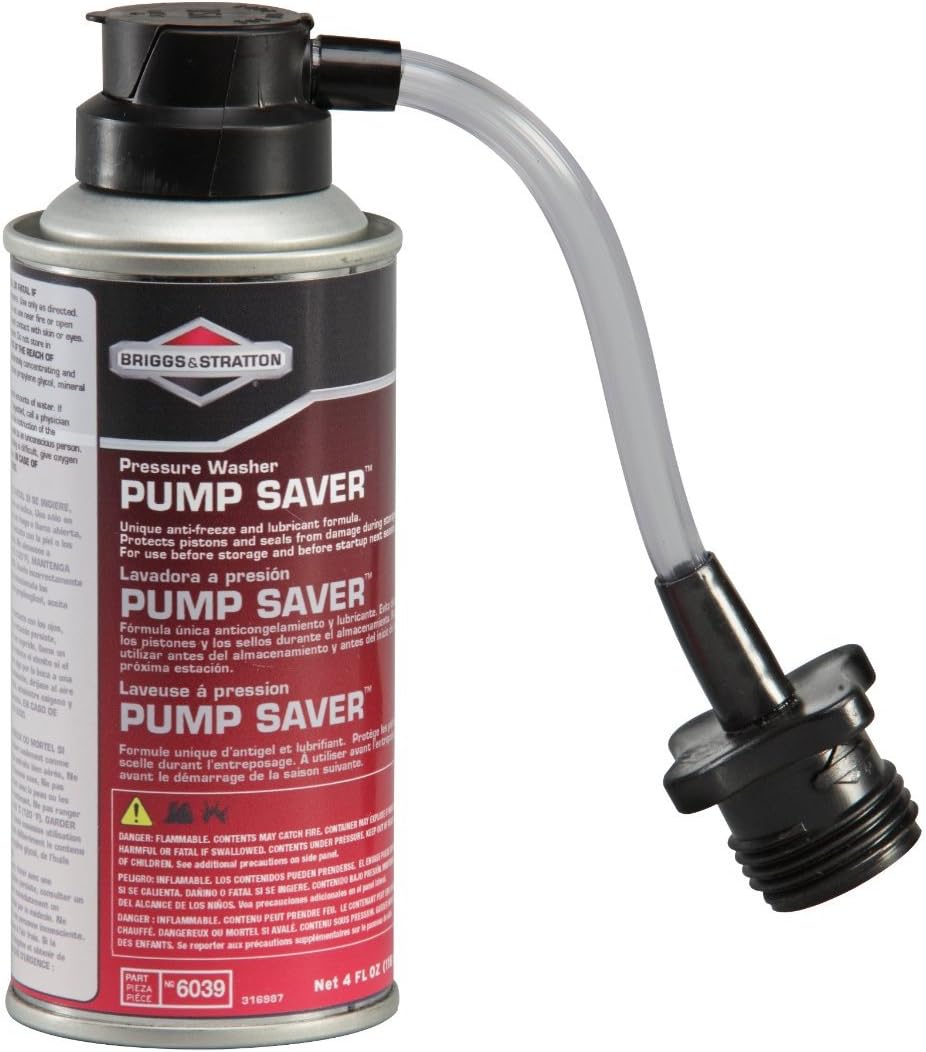
Pump saver
Briggs & Stratton Pressure Washer Pump Saver - 4 Oz. 6039Antifreeze and lubricant for the pistons and seals, before storage and before next season’s startup. The listing says the 4 oz bottle fits most brands. Attach it at the garden-hose inlet with the machine off. Not automotive coolant.
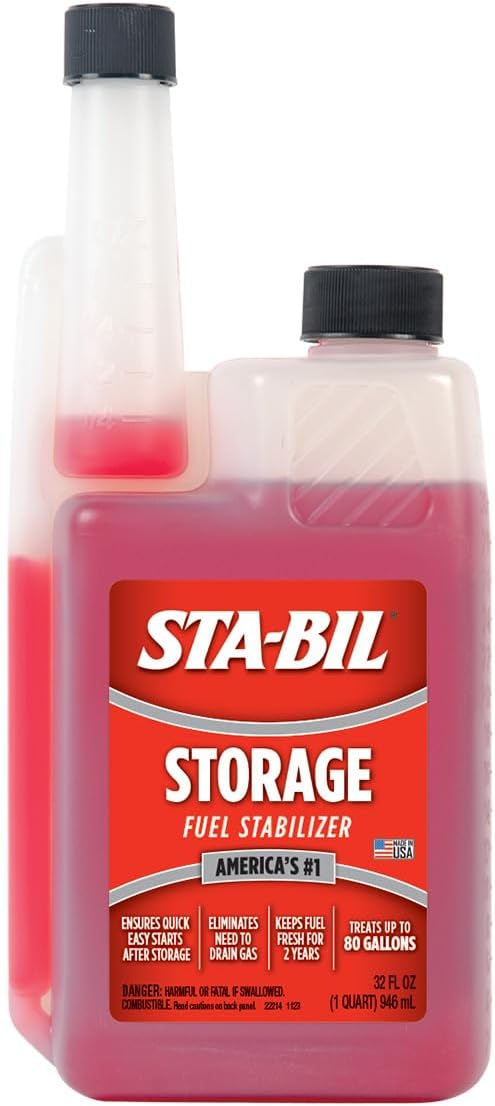
Fuel stabilizer
STA-BIL Storage Fuel Stabilizer, 32 ozFor a gas engine only. The listing’s dose is 1 oz per 2.5 gallons of fresh fuel, tank about 95% full, then run 5 minutes so treated gas reaches the carburetor. It says fuel stays fresh up to 24 months, including ethanol blends. Do not pour it in the pump.
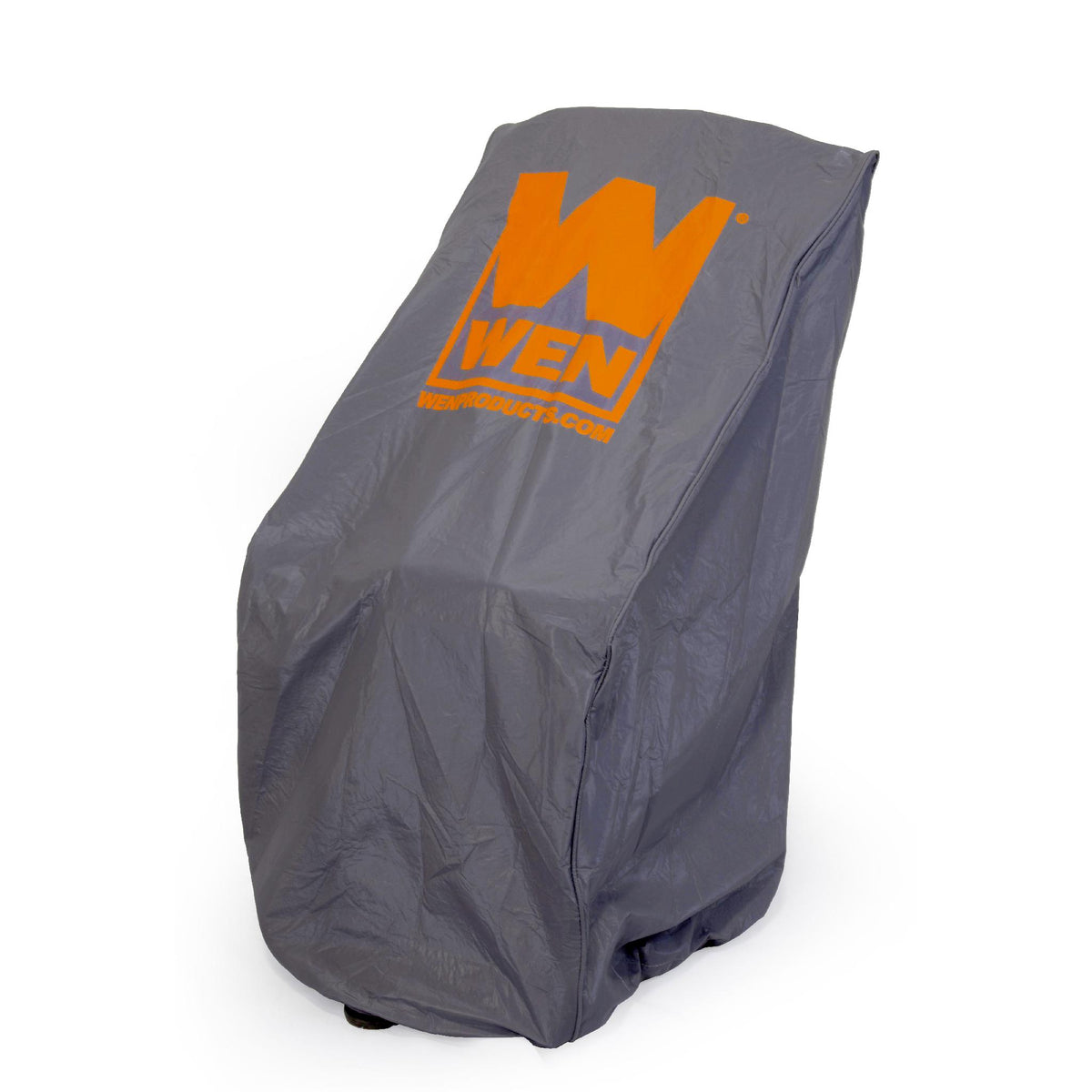
Storage cover
WEN PW31C Universal Weatherproof Pressure Washer CoverVinyl exterior, cotton lining, elastic base, and a drawstring. Designed for the WEN PW31, and the listing says it also fits a machine up to 23 × 20.5 × 39 inches. Measure first. A cover does not drain the pump.
Washing the pad before you store the machine? How to pressure wash a driveway. Siding? How to pressure wash a house. What was allowed in the cannon? Foam cannons and soap. Gun thread that is not 1/4″ QC? Quick-connect wands.
Charts first
Orifice, deck size, and fittings are the product. Shopping links come after the numbers.
Not a shop
We publish matching logic. We do not stock machines, take payments, or pretend to be a storefront.
Associates publisher
Amazon links use tag nozzlekit-20 and may earn a commission. Nothing is dressed up as “Buy now.”